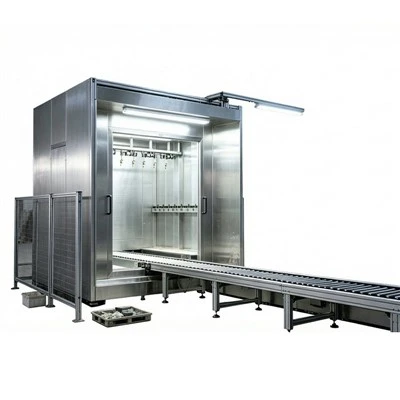
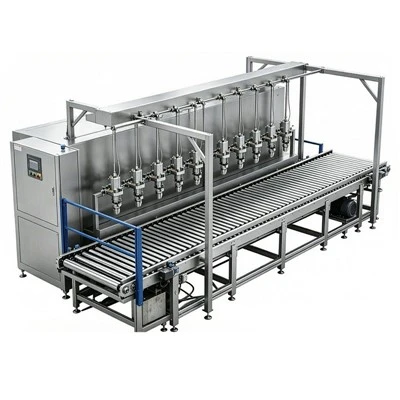
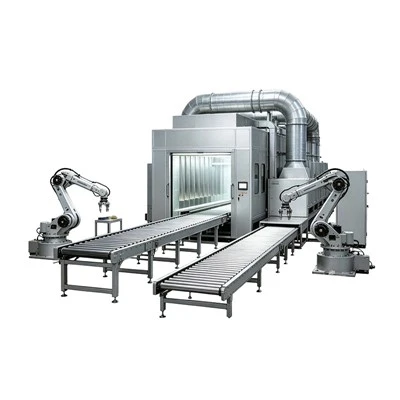
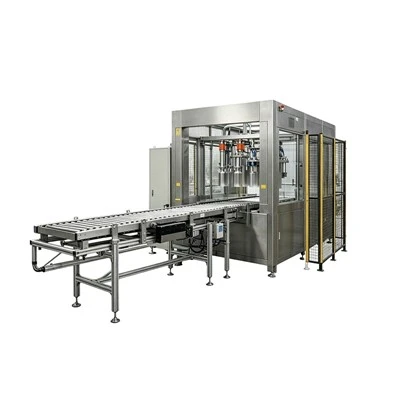
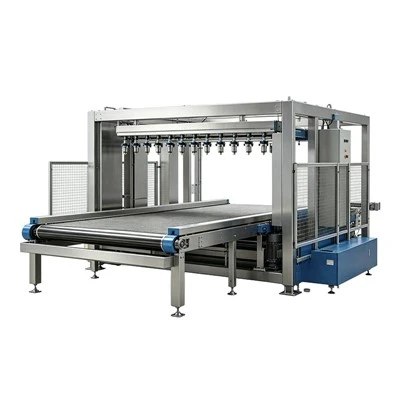
Automated spraying systems are widely used across industries such as automotive manufacturing, automotive parts, construction machinery, aerospace, wood furniture, wind power, and defense, as well as in sectors like marine and offshore engineering, power and energy, rolling stock, shipping containers, and steel bridge structures.
Vision-based automated putty spraying systems utilize automated and intelligent technologies to replace traditional manual application methods, enabling defect recognition, quantitative inspection, spray path planning, and fully autonomous spraying operations. Application cases demonstrate significant improvements in operational efficiency compared to manual work, alongside a 10%–20% reduction in raw material waste.
One application involves the use of explosion-proof collaborative robots on a wheel hub suspension spraying line; by integrating with 3D laser cameras, the system achieves automated modeling and spray path generation. This setup enhances overall spraying efficiency and reduces coating consumption.
Technical solutions combining robotic arm motion control with water-based coating formulations enable multi-color spraying in a single operation. Such solutions have been shown to boost production efficiency and lower overall costs.
Automated spraying systems significantly enhance production efficiency and quality consistency, reduce coating waste and environmental pollution, improve operational safety, and are suitable for coating complex workpieces.