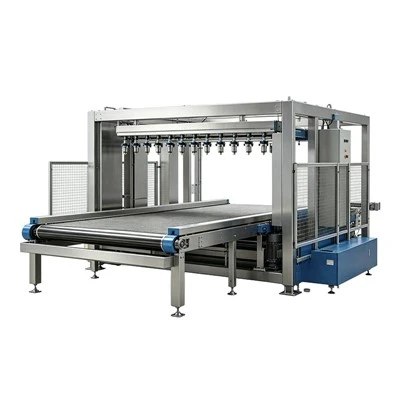
With continuous advancements in relevant technologies, the field of automated spraying is exhibiting new trends in development.
Increasing levels of intelligence. Modern spraying systems integrate a greater number of sensors and intelligent algorithms, enabling them to automatically identify product types, calculate optimal spraying paths, and adjust process parameters in real time. These capabilities enhance the equipment's adaptability, allowing it to meet increasingly complex and varied production demands.
Enhanced flexible production capabilities. To accommodate production models characterized by small batches and high product variety, spraying equipment is evolving toward greater flexibility. Through modular design and rapid changeover technologies, a single production line can handle products of various sizes and shapes, thereby shortening changeover times and improving equipment utilization rates.
Widespread adoption of eco-friendly technologies. Increasingly stringent environmental regulations are driving a shift toward cleaner spraying production. Environmentally friendly materials-such as water-based and high-solids coatings-are being widely adopted, alongside continuous optimizations in the associated spraying equipment and processes. Waste gas treatment technologies are also being improved to reduce volatile organic compound (VOC) emissions.
Deep integration of digital management. Spraying production lines are achieving data interoperability with information platforms such as Manufacturing Execution Systems (MES) and Enterprise Resource Planning (ERP) systems, creating a comprehensive digital production ecosystem. Managers can remotely monitor production status and access real-time efficiency and quality data, thereby supporting informed management decision-making.