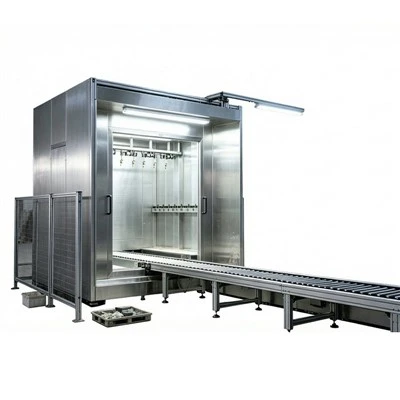
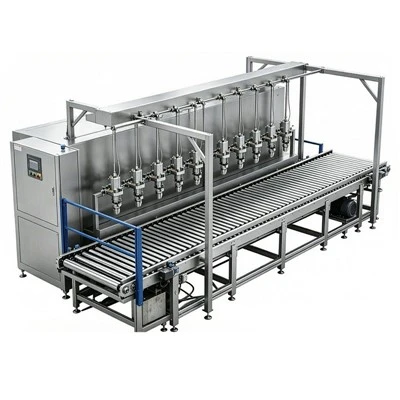
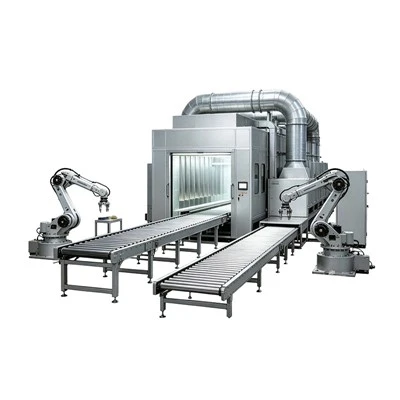
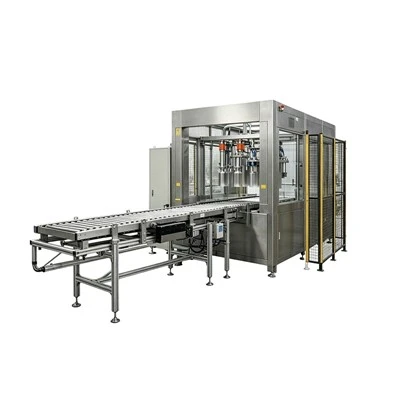
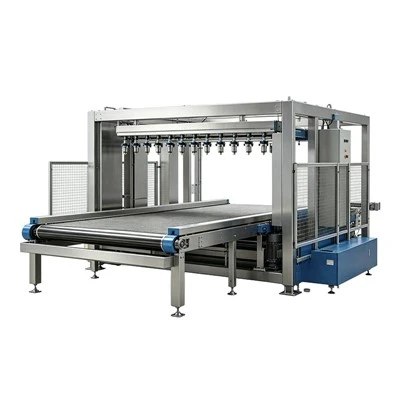
In modern industrial manufacturing, the surface coating stage significantly impacts a product's aesthetics, durability, and market competitiveness. With continuous technological advancements, automated spray painting equipment has emerged as a preferred choice across many industries; by leveraging automation and intelligent systems, this technology markedly improves coating efficiency and quality while minimizing uncertainties associated with human factors. This article provides a systematic overview of the technology's characteristics, advantages, and key application points to help readers fully appreciate its value.
1. Basic Principles and Composition of Automation Technology
The core of automated spray painting equipment lies in its highly integrated automation system. Typical equipment comprises several key components: the mechanical structure, control system, paint supply unit, and atomization assembly. The mechanical structure enables multi-axis movement of the spray gun, allowing for precise navigation along preset paths within three-dimensional space. Acting as the system's "brain," the control system coordinates component operations via programmed instructions, ensuring consistency in spray trajectories, paint output, and atomization parameters. The paint supply unit ensures a continuous flow of coating material at constant pressure and flow rates, while the atomization assembly utilizes a specialized design to convert the material into a uniform, fine mist. Working in concert, these components guarantee high repeatability and stability throughout the coating process.
2. Enhancing Coating Uniformity and Consistency
Manual spraying is often susceptible to variations in operator skill, physical stamina, and subjective judgment, frequently resulting in defects such as uneven film thickness, "orange peel" textures, or sagging. Automated equipment utilizes digital program control to replicate identical paths with millimeter-level precision, ensuring uniform coating thickness across every product surface. For instance, when dealing with complex curved surfaces or edges, the equipment employs path optimization algorithms to automatically adjust the spray gun's angle and movement speed, thereby preventing paint accumulation or missed spots. This precise control not only elevates the visual finish but also enhances the coating's corrosion and wear resistance, resulting in superior overall product quality.
3. Significantly Optimizing Production Efficiency and Resource Utilization
In traditional spraying operations, workers spend considerable time on repetitive tasks such as positioning, moving, and cleaning, limiting the proportion of time dedicated to actual spraying. Automated equipment enables continuous operation, drastically reducing the processing cycle time per unit. Taking a medium-sized production line as an example, adopting an automated solution can increase daily throughput by approximately 30% to 50%. Thanks to scientifically calculated spraying paths, coating utilization rates are significantly improved. The reduction in overspray not only saves on raw material costs but also alleviates the burden of subsequent cleanup. The equipment is typically equipped with a recycling system that filters and reuses unadhered coating, further controlling material consumption. In the long run, this high-efficiency operation helps enterprises achieve superior overall benefits in a competitive market.
4. Improved Work Environment and Safety
In manual spraying environments, workers face high health risks due to prolonged exposure to volatile organic compounds (VOCs) and airborne particulates. Automated equipment utilizes enclosed operating chambers and integrated ventilation systems to contain and treat hazardous substances, effectively protecting personnel health. The equipment features multiple safety interlock mechanisms-such as emergency stop buttons, protective guards for moving parts, and alarms for abnormal air pressure-to minimize the risk of accidents. This human-centric design not only complies with modern production safety standards but also reduces potential management costs for the enterprise.