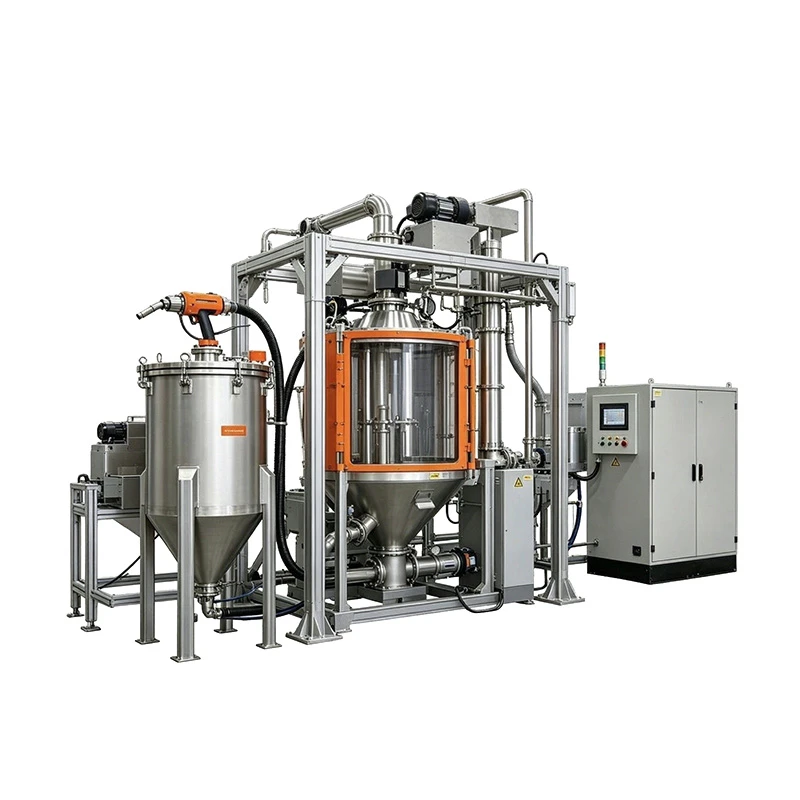
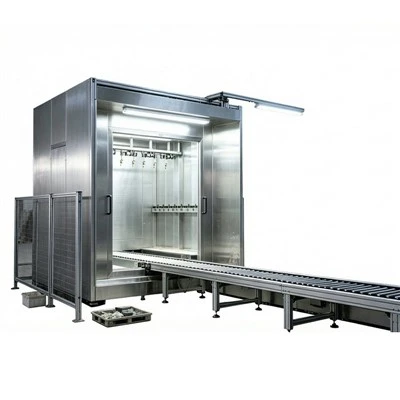
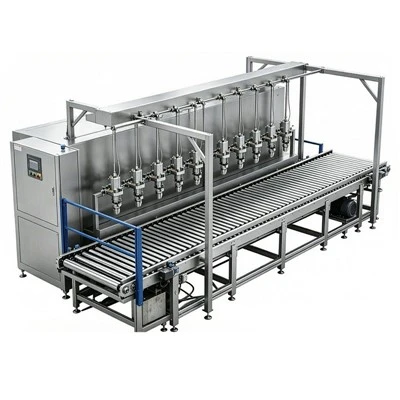
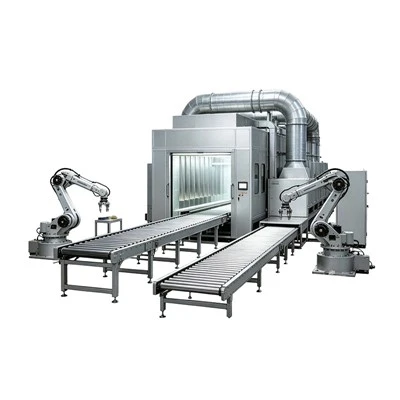
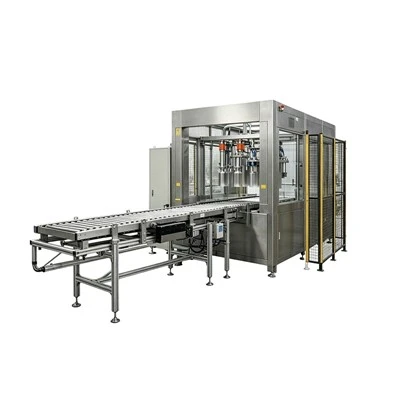
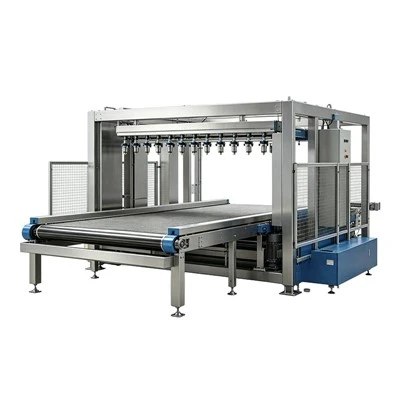
(1) Favorable working environment and conditions. Stationary electrostatic spraying equipment is commonly integrated with overhead conveyor systems to form continuous finishing production lines. In this setup, the operator's tasks are limited to preparing, loading, and unloading workpieces, as well as adjusting and monitoring the equipment; consequently, direct contact with coating materials and the intensity of physical labor are significantly reduced. Furthermore, spraying within a high-voltage electrostatic field results in far less paint mist dispersion compared to air-atomized or airless spraying, thereby markedly improving the finishing environment.
(2) High coating utilization rate. During high-voltage electrostatic spraying, negatively charged coating particles are deposited onto the workpiece surface along the lines of electric force. As a result, there is virtually no rebound of the coating jet or scattering of paint mist; losses are minimal, and coating utilization rates can exceed 85%–90%.
(3) High finishing quality. When electrostatic spraying is performed in strict accordance with correct operating procedures, the high-voltage electrostatic field ensures a high degree of dispersion and uniform distribution of coating particles within the spray jet. This results in a smooth, uniform coating on the workpiece surface, characterized by high gloss and strong adhesion.
(4) High finishing efficiency. Production experience demonstrates that on continuous electrostatic spraying lines, conveyor speeds can reach 24 m/min-far exceeding the speeds of other spraying lines. The comprehensive economic benefits of electrostatic spraying are particularly evident for wooden components with complex, open-frame structures (such as tables, chairs, and frames) that are unsuitable for curtain coating or roller coating.
The primary disadvantage of the electrostatic spraying method is the significant risk of fire; sparks caused by improper spray distances or operational errors can easily ignite a fire. Therefore, reliable fire and explosion prevention facilities are essential, and safety operating procedures must be strictly observed. Additionally, achieving a uniform coating is difficult when dealing with complex shapes or surfaces featuring deep recesses and protrusions.