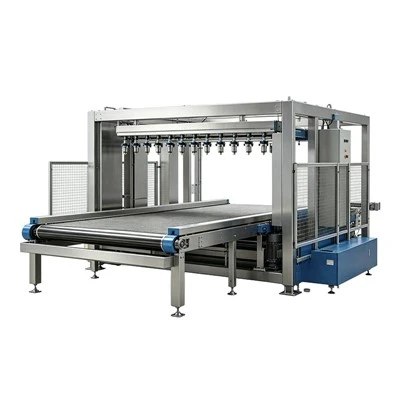
Electrostatic oiling operates on the principle of electrostatic attraction: the grounded steel strip to be coated serves as the positive electrode, while the oil atomizer (such as a spray cup or spray disk) is connected to a high-voltage power source to act as the negative electrode.
The steel strip passes between upper and lower oiling beams; these beams are constructed from a specialized aluminum alloy and mounted on adjustable, insulated support arms. The gap on each beam can be precisely adjusted to a uniform 0.2 mm. Internally, the beams feature an oil channel with an inlet connection at the center and return lines at both ends. Positioned at a specific distance from the steel strip, the beams are designed to allow oil to flow to the discharge slot under zero pressure.
When the oiling beams are energized, a high-voltage electrostatic field is generated between the beams and the grounded steel strip. A corona discharge occurs at the negative electrode, imparting a negative charge to the atomized oil mist. Driven by the electrostatic field, the charged particles are efficiently and uniformly attracted to the passing steel strip along the lines of force, creating a unique "wrap-around effect." While positive corona discharge can also be used for electrostatic coating, negative polarity corona discharge is preferred because it has a lower critical (onset) voltage, offers greater stability and safety, and is less prone to sparking.